Gary Neville, Jamie Carragher, and the Podcast That Keeps Eating Itself
0 View

- Publish Date:
- November 26, 2026
- Category:
- Latest News
- Video License
- Standard License
- Imported From:
- Youtube
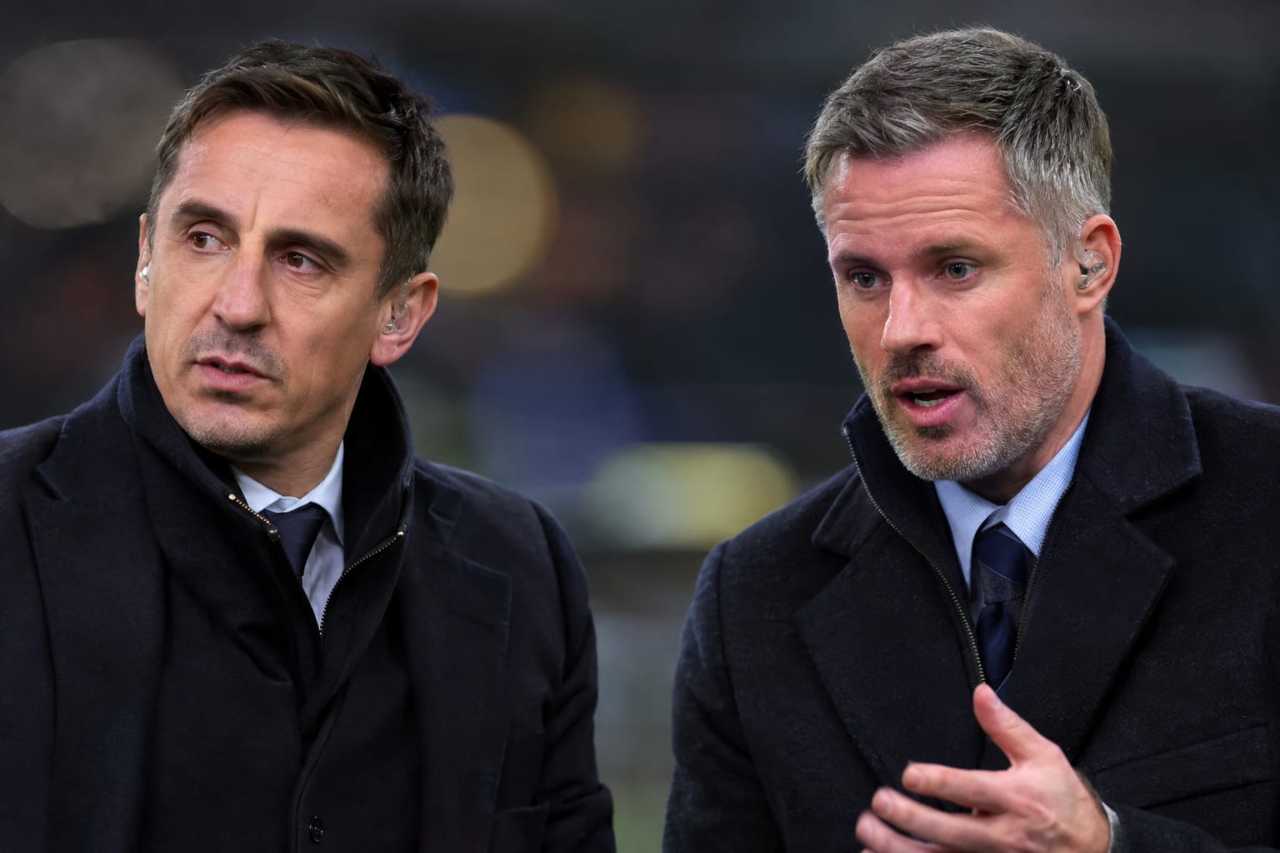
Here's a question worth asking: when did football punditry become a hall of mirrors?
Gary Neville and Jamie Carragher built something real with The Overlap and their various podcast ventures. Two blokes who actually played the game, talking football with opinions that carry weight. That's valuable. I get why millions tune in.
But something's shifted. According to Jonathan Liew's piece in the Guardian this week, Neville and Carragher have found themselves trapped in what he calls an "inescapable podcasting feedback loop of doom." The pair reportedly got tangled up reacting to Manchester United and Michael Carrick in a way that reveals a bigger problem than just one episode.
So what's actually going on here?
Think about it this way. A podcast goes out. Clips get cut. Those clips get shared on social media, stripped of context. Other podcasts react to the clips. News sites write up the reactions. Then the original podcasters come back the following week to respond to the reaction to their own reaction. Round and round it goes.
Nobody's actually talking about football anymore. They're talking about the conversation about football.
I've spent almost nine years now living on the road, full-time, since 2017. One thing travel teaches you fast: there's a massive difference between experiencing something yourself and consuming somebody else's commentary about it. Stand in a market in Chiang Mai, taste the food, talk to the vendor. That's real. Scroll through fifty TikToks of other people doing the same thing? That's a reflection of a reflection. You start to lose the thread of what actually happened versus what everyone's saying happened.
Football media has fallen into exactly that trap. And it's not really Neville's or Carragher's fault individually. It's the system. Podcasts need content every week. Clips need engagement. Engagement needs controversy. Controversy needs somebody to disagree with somebody else, publicly, repeatedly, until the original subject — in this case, how a football club is actually performing — gets buried under layers of meta-commentary.
Here's what I find genuinely interesting about it, though. This isn't unique to football. It's happening everywhere opinions get monetized. Travel influencers react to other travel influencers' takes on destinations they've never visited. Business podcasters debate other business podcasters' interpretations of a third podcaster's framework. At some point you have to ask: has anyone here actually done the thing we're all talking about?
I've built a life around avoiding exactly that loop. When I want to know if a border crossing is a hassle, or whether a town is worth three days instead of one, I don't trust the algorithm's favorite opinion. I go. I ask locals. I make mistakes and adjust. That's slower and messier than scrolling, sure. But it's mine.
Neville and Carragher aren't wrong to have opinions about Michael Carrick or Manchester United. They played at the top level; they've earned the right to a take. The problem is the machine built around their takes, a machine that rewards reaction over reflection, speed over substance, and volume over insight.
What happens if a pundit just... stopped? Skipped a week of hot takes, watched the match quietly, and only spoke when there was something new to say rather than something new to react to? Would anyone notice, or has the loop become so normalized that silence itself would read as controversy?
That's the real question buried in Liew's piece. Not whether Neville and Carragher are good or bad at their jobs — they're clearly skilled broadcasters. It's whether the format itself has outgrown its usefulness, trapping even sharp, experienced voices in an echo chamber that never lets a story breathe.
If you're a listener, here's a small experiment worth trying. Next time a sports take blows up your feed, skip the reaction videos. Go watch the actual match highlights yourself. Form your own opinion before anyone else's gets stapled to your brain.
Independence of thought works the same way independence of travel does. You've got to be willing to step outside the loop, go look for yourself, and trust what you find. The feedback loop will always be there waiting. You don't have to climb back in.
Source: The Guardian
Read our previous article: History Hit Is Taking Its Podcasts on the Road — And That Changes How You Experience History
Sponsored Area