The Woman Who Got Diagnosed at 40 and Built a 3.7 Million Download Podcast
0 View

- Publish Date:
- October 12, 2026
- Category:
- Latest News
- Video License
- Standard License
- Imported From:
- Youtube
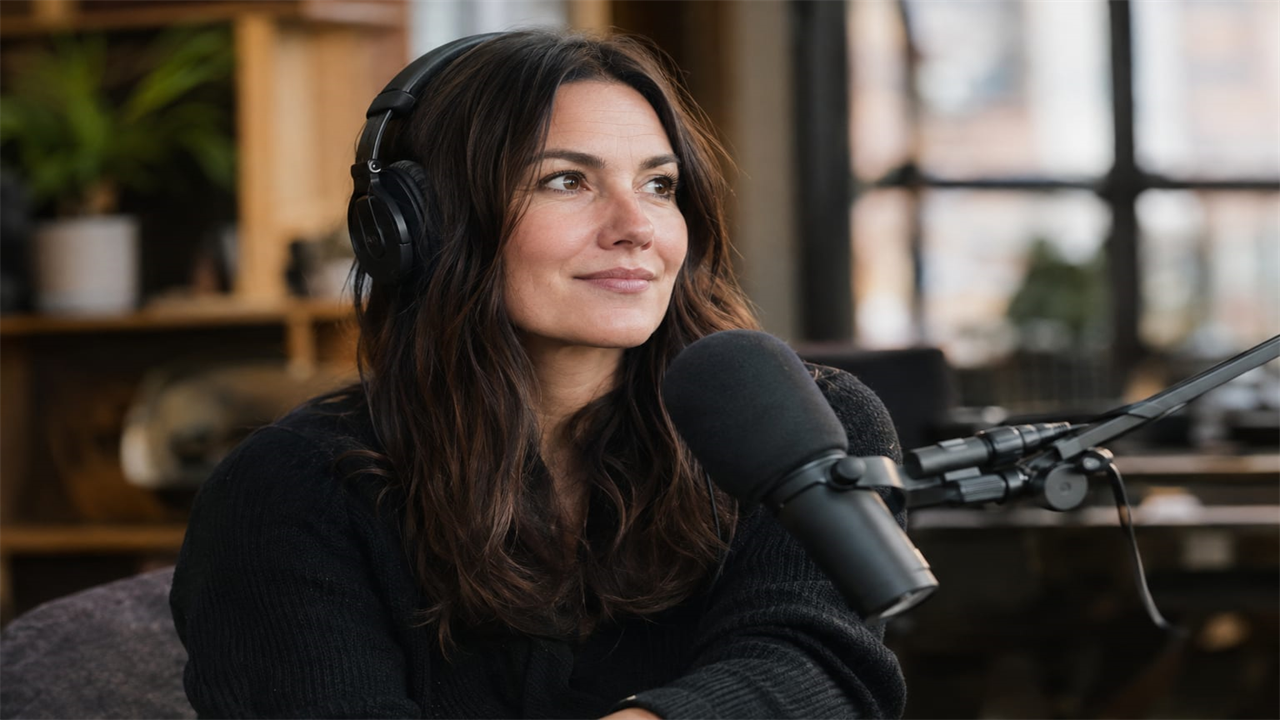
Kate Moryoussef didn't find out she had ADHD until she was 40 years old. Both her brothers had been diagnosed as kids. She spent decades not knowing.
That's the part that stops me. Forty years of living with something and not having a name for it.
Now she's just won gold in the parenting category at the British Podcast Awards for The ADHD Women's Wellbeing Podcast, standing in a room with the likes of Peter Crouch, Alan Carr and Pete Wicks. "It was very exciting to win this award," she told The Jewish Chronicle. "There were lots of big names in the room – and me."
Here's how she got there.
It Started With a Google Search
Kate, who's from Manchester and attends Shaare Hayim Congregation, had a daughter being assessed for dyslexia, dyscalculia and dyspraxia. None of it quite fit. So she did what a lot of us do when we're stuck — she searched it.
"When I did a Google search of ADHD traits in women and girls, they definitely matched my daughter, but so many of those traits were in me too."
That's the moment. A Google search that cracks open forty years of your own life.
Kate had worked in PR before retraining in health and wellbeing. After her diagnosis, she went looking for information on ADHD and women's wellbeing and found almost nothing. So she built it herself. The podcast launched less than five years ago and has already racked up 3.7 million downloads. She's written a book, The ADHD Women's Wellbeing Toolkit, and now runs workshops too.
Why Doctors Keep Missing It
Kate's theory is blunt: medicine has a blind spot, and it's shaped like a woman.
"Women's health has never been a priority as the medical world is mostly male dominated, so the research into women and ADHD hasn't been there, and if you aren't taught about it in medical school, you don't know what to look for."
Boys with ADHD tend to show disruptive behavior — easy to spot, easy to flag. Girls show up differently. Skin-picking. Nail-biting. Doodling. Sleeplessness, claustrophobia, anxiety, OCD. None of it screams "ADHD" the way a classroom disruption does.
And then there's masking. Women and girls get very good at looking like they're coping, even when they're not. Kate says she talks to women in their 50s and 60s with impressive careers who've spent decades compensating without knowing why they had to work so much harder than everyone else just to keep up.
That's a long time to wonder what's wrong with you when nothing is wrong with you — you just never got the manual.
Managing It Without Medication
Kate doesn't take medication for her own ADHD, though she's clear she's not against it for people who find it helpful. Her approach is boundaries. "What should I be saying no to? What should I be saying yes to? It's about curating a lifestyle that's better for you." She adds sleep routines, magnesium, HRT, exercise, eating well — the unglamorous daily maintenance that actually works.
She's also got an interesting theory about her own community: that neurodivergence shows up more often among Jewish people than in the general population. "We see so much innovation and passion, so a lot of crossover with ADHD traits. Albert Einstein was 100 per cent neurodivergent."
Whether or not the numbers back that up, I like the instinct behind it — looking at the traits people usually apologize for and asking if they might actually be the engine room.
Pushing Back on "Overdiagnosed"
Some politicians and media voices argue ADHD is overdiagnosed. Kate doesn't buy it. Her argument is that it's not diagnosis that's the problem — it's that our systems were never built for how a lot of brains actually work. She points out our education model hasn't fundamentally changed in a century, and there's a reasonable case that more outdoor time and more audio-visual teaching would help nearly every student, not just the ones with a diagnosis.
The Part That Sticks With Me
Kate's four kids all have ADHD, each showing up differently. She hears from women in their 60s and 70s who are only now getting diagnosed, telling her: "I'm finally able to understand why I'm like who I am."
That line is the whole story, really. Understanding yourself isn't something with an expiration date. You can spend forty years, sixty years, not knowing — and then one search, one conversation, one podcast episode changes everything.
I think about that a lot when people assume life gets smaller as you get older. Kate's work says the opposite: sometimes the real discovery happens decades in, and it's never too late to finally understand who you've been all along.
Source: The Jewish Chronicle
Missed the last one? Why Women on Reddit Are Warming Up to Podcast Ads
Sponsored Area