Make Money Podcasting: 5 Ways To Monetize A Podcast With AI
31 View

- Publish Date:
- June 30, 2026
- Category:
- Podcasting
- Video License
- Standard License
- Imported From:
- Youtube
In this video, I'm sharing 5 podcast monetization strategies with AI, that work even with a small audience — and how Claude Cowork (AI) makes each one faster to set up as a solo creator.
I've been podcasting for 12 years and generated multiple 6 figures with no paid ads. These are the exact strategies I use.
You don't need more listeners. You need a system. By the end of this video, you'll know exactly which strategy fits where you are right now.
Drop a comment telling me which strategy you're trying first — I read every one and I'll go deeper on the most requested ones.
Resources mentioned:
🔗 Free Resource Guide: https://bit.ly/4xBr6kU
🔗 Try Canva: https://www.canva.com/
🔗 Try Gumroad: https://gumroad.com/
🔗 Try Claude Cowork: https://claude.ai/referral/oanMECj6ig
0:00 Why you're monetizing your podcast backwards
1:17 Strategy 1 — Digital Products (score 7/10)
3:42 Strategy 2 — Private Coaching (score 10/10)
5:42 Strategy 3 — Affiliate Marketing (score 7/10)
7:54 Strategy 4 — Paid Membership (score 7/10)
9:54 Strategy 5 — Brand Deals & Sponsorships (score 9/10)
11:47 Recap + what to watch next
-----------------------------------------
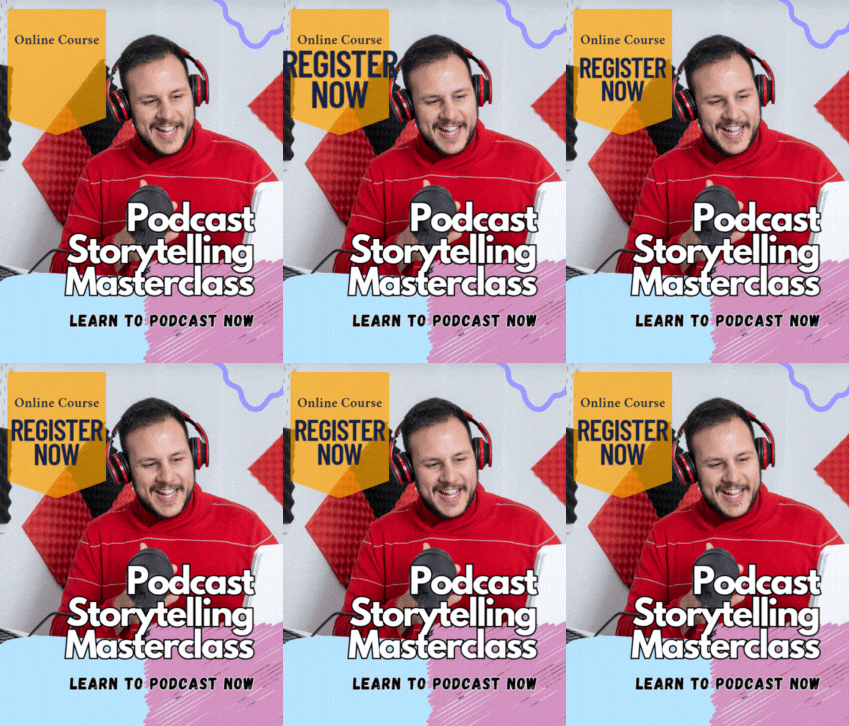
Podcast Storytelling Masterclass
🎤 Want to make your podcast truly unforgettable? Podcast Storytelling Masterclass is your guide to using stories as powerful tools to captivate, connect with, and grow your audience. This class dives deep into the essential techniques that transform your delivery—helping you craft stories that resonate, inspire, and leave a lasting impression.
You'll learn how to choose the right stories, use them instead of traditional interview questions, and guide your guests to share meaningful experiences that engage listeners. Storytelling isn't just popular—it’s how people relate to your message. This course shows you how to harness that connection to elevate your podcast from ordinary to exceptional.
👉 Click here to join the online course now and start building stronger, more emotional connections with your audience through storytelling.
2 Must-Know Podcasting Tips for Your Show
Selecting the Best Hosting Platform for Your Podcast

Choosing the right hosting platform is essential for distributing your podcast efficiently and reaching your target audience. Evaluate platforms based on factors such as storage capacity, bandwidth, ease of use, and analytics capabilities. Look for services that offer reliable uptime and fast upload speeds to ensure your episodes are accessible to listeners without delay. Consider platforms that support multiple podcast directories, including Apple Podcasts, Spotify, and Google Podcasts, to maximize your reach. Additionally, assess whether the hosting service provides tools for monetization, such as advertising integration or subscription options. A robust hosting platform simplifies the distribution process, allowing you to focus on creating quality content for your audience.
Integrating Music and Sound Effects Appropriately

Music and sound effects can significantly enhance the quality and appeal of your podcast when used appropriately. Select intro and outro music that reflects the tone and theme of your show, creating a consistent auditory brand identity. Use background music sparingly during episodes to complement the conversation without overpowering it. Incorporate sound effects to emphasize key points, transitions, or humorous elements, adding a dynamic layer to your content. Ensure that all audio elements are balanced and do not distract from the primary audio, maintaining a professional and polished sound. Thoughtful integration of music and effects can make your podcast more engaging and enjoyable for your listeners.
Frequently Asked Questions
How can I make my podcast stand out in a crowded market?
Develop a unique voice, focus on a specific niche, deliver consistent quality, and engage authentically with your audience. Creative content and distinct branding also help differentiate your podcast.
How often should I release new podcast episodes?
Consistency is key. Whether weekly, bi-weekly, or monthly, establish a schedule that you can maintain to keep your audience engaged and coming back for more.
How do I choose a niche for my podcast?
Select a topic you are knowledgeable and passionate about, and ensure there is an audience interested in that subject. A specific niche helps attract dedicated listeners.
What are the best practices for podcast episode structure?
Start with a strong introduction, followed by the main discussion or interview, and end with a summary or call to action. Consistent formatting helps listeners know what to expect each episode.
Should I use background music or sound effects in my podcast?
Background music and sound effects can enhance your podcast by setting the mood and emphasizing points. Use them sparingly to avoid distracting from the main content and maintain a professional sound.
Statistics
- Using transcription services can make podcasts accessible to a wider audience, increasing reach by up to 25%.
- About 60% of podcasters find that offering premium content subscriptions generates additional revenue.
- Podcasts that include detailed show notes experience a 50% increase in listener engagement.
- Investing in professional editing services can enhance the overall quality of a podcast, leading to a 30% increase in positive feedback.
- Collaborating with other podcasters can lead to a 20% growth in listener base.
- Podcasts promoting their episodes on social media platforms see a 40% boost in new subscribers.
- Effective use of keywords in podcast descriptions can improve search rankings by 30%.
- Approximately 40% of podcasters use background music to enhance the listening experience.
- Guest appearances on podcasts can result in a 15% increase in subscriber numbers.
- Podcasts that utilize analytics to refine content strategies experience a 40% improvement in listener satisfaction.
- Investing time in marketing can increase a podcast’s audience by up to 50% annually.
- Podcasts with consistent weekly releases are 60% more likely to grow their audience steadily.
- About 55% of podcasters use interviews as a key strategy to provide diverse content.
- Engaging storytelling techniques can increase listener retention rates by up to 50%.
- Podcasts that release episodes on Tuesdays and Thursdays see higher download rates by 30%.
- Podcasts with interactive segments, such as Q&A sessions, see a 25% boost in audience participation.
External Links
hootsuite.com
socialmediaexaminer.com
podcastcareers.com
transistor.fm
help.apple.com
anchor.fm
zoom.us
podcastinsights.com
podcastmovement.com
podcastitalia.com
thepodcasthost.com
podbean.com
radiopublic.com
adobe.com
apple.com
podcasters.spotify.com
screencast-o-matic.com
How To
How To Create Engaging Podcast Descriptions
Creating engaging podcast descriptions attracts potential listeners by clearly conveying what your show is about and what they can expect. Start with a compelling introduction that summarizes your podcast’s theme, purpose, and the value it offers to listeners. Use clear and concise language, incorporating relevant keywords to improve searchability on podcast directories and search engines. Highlight unique aspects of your podcast, such as recurring segments, expert guests, or specific topics covered, to differentiate it from others in the same niche. Include a brief overview of the host(s) to establish a personal connection with your audience. Add a call to action, encouraging potential listeners to subscribe, leave reviews, or visit your website for more information. An engaging podcast description not only informs but also entices potential listeners to tune in and become part of your audience.
Sponsored Area