Podcasts Are Easy to Search Now. Editing Them Is Still a Human Job.
0 View

- Publish Date:
- October 20, 2026
- Category:
- Latest News
- Video License
- Standard License
- Imported From:
- Youtube
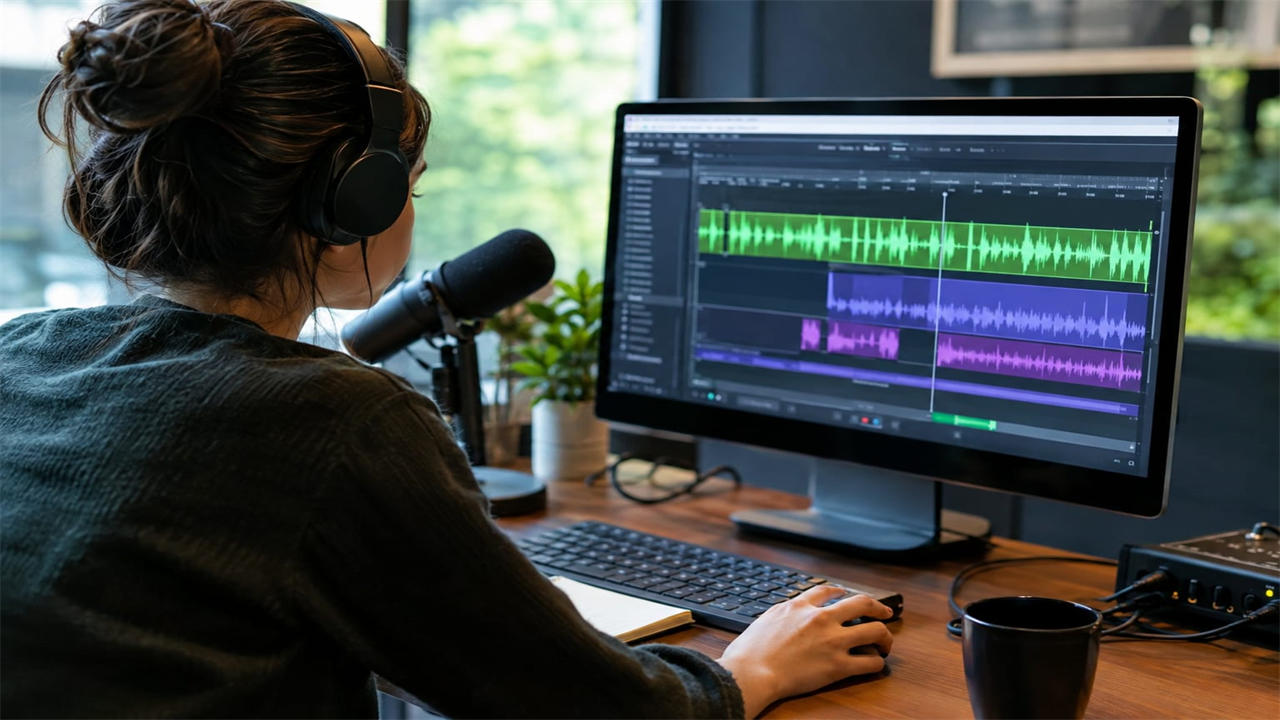
Here's a number that stopped me mid-scroll: 130,000 podcasts, with about 20,000 new episodes being added every single day. That's not a library. That's a flood.
And somebody just built a search engine for it.
A startup called Particle launched a tool called Radar back on August 26th. It's a podcast search engine, but the real story isn't the search box — it's who's using it. According to TechCrunch, hedge funds are Radar's highest-volume customers. Not podcast fans. Not media companies. Hedge funds. Along with AI search platforms and data resellers.
Why would a hedge fund care about 130,000 podcasts? Because somewhere in those millions of hours of talk, someone said something about a company, a product, a merger, a trend — and finding that one sentence used to mean listening to the whole episode. Now an AI agent can search transcripts, track mentions over time, flag speakers, pull timestamps, and send an alert the moment a name gets mentioned.
That's the part of this story that's moving fast. Understanding what's in a recording has gotten genuinely easy for machines.
Changing it is a different animal entirely.
Why Finding a Clip Is Easier Than Making One
I spend a lot of my time editing video and audio on the road — campground Wi-Fi, a laptop, and whatever footage I grabbed that day. So this next part caught my attention.
Daisy Zhang, head of growth marketing at Descript, put it simply: "Understanding content and changing content are fundamentally different tasks." An AI can read a transcript and spot a topic in seconds. But deciding where a clip should start, what to cut, when a joke needs its pause to land — that's judgment, not just pattern recognition.
Descript builds editing software, and it just connected itself to Claude and ChatGPT through something called MCP — Model Context Protocol. Basically a bridge that lets you type "trim this interview down to the best two minutes" into a chatbot, and have it actually go do the work inside your Descript project. No opening a timeline. No dragging clips around.
Is that useful? Ahrefs found 83% of marketers already use Claude for content creation, and 76% use ChatGPT. So the tools people already have open all day just got hands.
Through that connection, an agent can pull in media, cut filler words, slap on captions, build a highlight reel, clean up audio, and spit out a shareable link. One long conversation turns into clips, summaries, social posts, and a finished video — without you touching an export button.
Where the Machine Still Needs a Human
But here's where it gets interesting, and honestly a little reassuring. Zhang says some decisions still don't hand off well — storytelling, comedic timing, sensitive edits, the stuff where a creator has a feeling about what should stay in. Those choices depend on judgment that a machine hasn't earned yet.
That tracks with something I've learned the hard way editing my own travel footage. An algorithm can find the moment I mention a place name. It can't tell me which thirty seconds actually captures why that sunset in the Badlands mattered.
Zhang's advice for anyone wanting to experiment with this stuff: don't try to automate everything at once. Pick one repetitive task where you already know what a good result looks like. Measure how much time it actually saves once you include reviewing and fixing the AI's work. If it holds up, expand from there. If it doesn't, you've only lost an afternoon, not your whole workflow.
That's a pretty good approach to any new tool, honestly. Try it small. See what breaks. Adjust.
So What Does This Mean for You?
If you make podcasts, videos, or any long-form content, the discovery side of your work is about to get a lot cheaper. Finding the good moment buried in two hours of tape? A machine will likely do that for you soon, maybe already does.
But turning that moment into something worth publishing — that's still yours to decide.
The question worth sitting with isn't whether AI can edit. It's how much of the decision-making you're actually willing to hand over before the part that made the work yours disappears with it.
Source: DesignRush
Our last article on this: Spotify Just Made It Easier for Podcasters to Get Paid by Their Biggest Fans
Sponsored Area