Turns Out Podcasts Aren't Just a Solo Thing Anymore
0 View

- Publish Date:
- November 19, 2026
- Category:
- Latest News
- Video License
- Standard License
- Imported From:
- Youtube
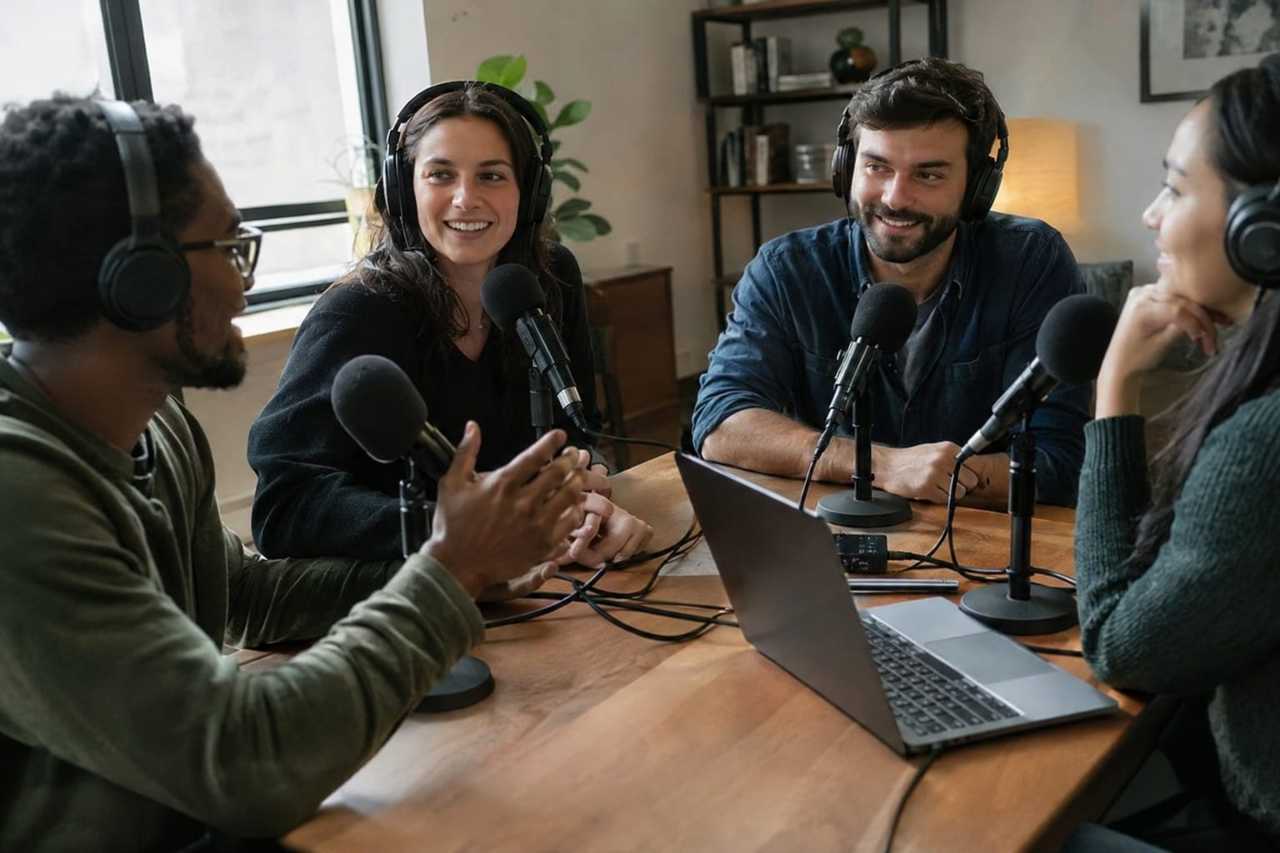
I always figured podcasts were a one-person activity. Headphones in, world shut out. That's how I listen to them anyway—usually on a long drive or while I'm sorting through photos from the last trip.
Turns out I'm behind the times.
New research from IAB UK just dropped some numbers that caught my attention. The organization's latest Compass report surveyed 1,029 UK podcast consumers, working with a research firm called Walr, and what they found flips the whole "podcasts are personal" idea on its head.
Here's the headline number: 74% of people who watch video podcasts have watched them on an actual TV screen. Not a phone. Not a laptop propped up on the kitchen counter. A TV.
And it gets more interesting. More than a third of those TV watchers—37%—say they always or often watch with someone else. Bump that up to viewers between 18 and 34, and it jumps to 52%. More than half of young adults are watching podcasts as a shared activity.
So why does this matter? Because it means the whole category has quietly split into two completely different experiences. One is intimate and solo. The other is social and communal. Same word—"podcast"—but two very different rooms.
What People Actually Want to Watch Together
Once you're on the couch with somebody else, the kind of content you reach for changes too.
The report found that comedy performs way better on video than audio—41% prefer it on screen versus just 24% on audio. Entertainment shows follow a similar pattern.
But flip to news and politics, and people want the opposite. Audio wins there, 34% to 26% for news, and 32% to 22% for politics.
That makes sense when you think about it. A heavy news story feels like something you want delivered quietly, directly, almost like someone's talking just to you. A comedy podcast feels like something you want to laugh at with a friend sitting next to you, pointing at the screen.
Elizabeth Lane, head of insight at IAB UK, put it simply: people experience podcasts in very different ways—on headphones during a commute, or on a TV with friends—and advertisers need a different approach for each. She says genre is a good starting point. News and politics still work best as audio, where a brand is speaking to one person in something that feels intimate. A comedy podcast watched on the sofa with friends is a shared, big-screen moment, and it calls for a completely different kind of ad.
Why This Matters Beyond the Ad World
I don't sell advertising, and neither do most of you reading this. So why bring it up?
Because it's a good reminder that the tools we use change the way we actually live, even when we're not paying attention. A podcast used to mean one thing. Now it means several things depending on where you're sitting and who's next to you.
I've noticed the same shift in my own habits since I started traveling full-time back in 2017. The way I consume content on the road looks nothing like it did when I had a house, a couch, and a set routine. Sometimes I'm alone with earbuds on a train through Portugal. Other times I'm in a hostel common room, phone propped against a water bottle, laughing with strangers I met three hours earlier.
Different setting. Different content. Different experience entirely.
That's really the lesson buried in this IAB UK report. Technology doesn't just deliver content—it shapes how we gather, how we laugh, and who we let in on the moment.
So here's a question worth asking yourself: next time you reach for a podcast, are you choosing it because you want company, or because you want quiet? Both are valid. But noticing the difference might change what you pick—and who you invite to watch it with you.
Source: InPublishing
Read our previous article: Why Podcast Ad Dollars Don't Follow the Obvious Rules
Sponsored Area