How Podcasts Are Turning One Person's Story Into Everyone's Conversation
0 View

- Publish Date:
- November 28, 2026
- Category:
- Latest News
- Video License
- Standard License
- Imported From:
- Youtube
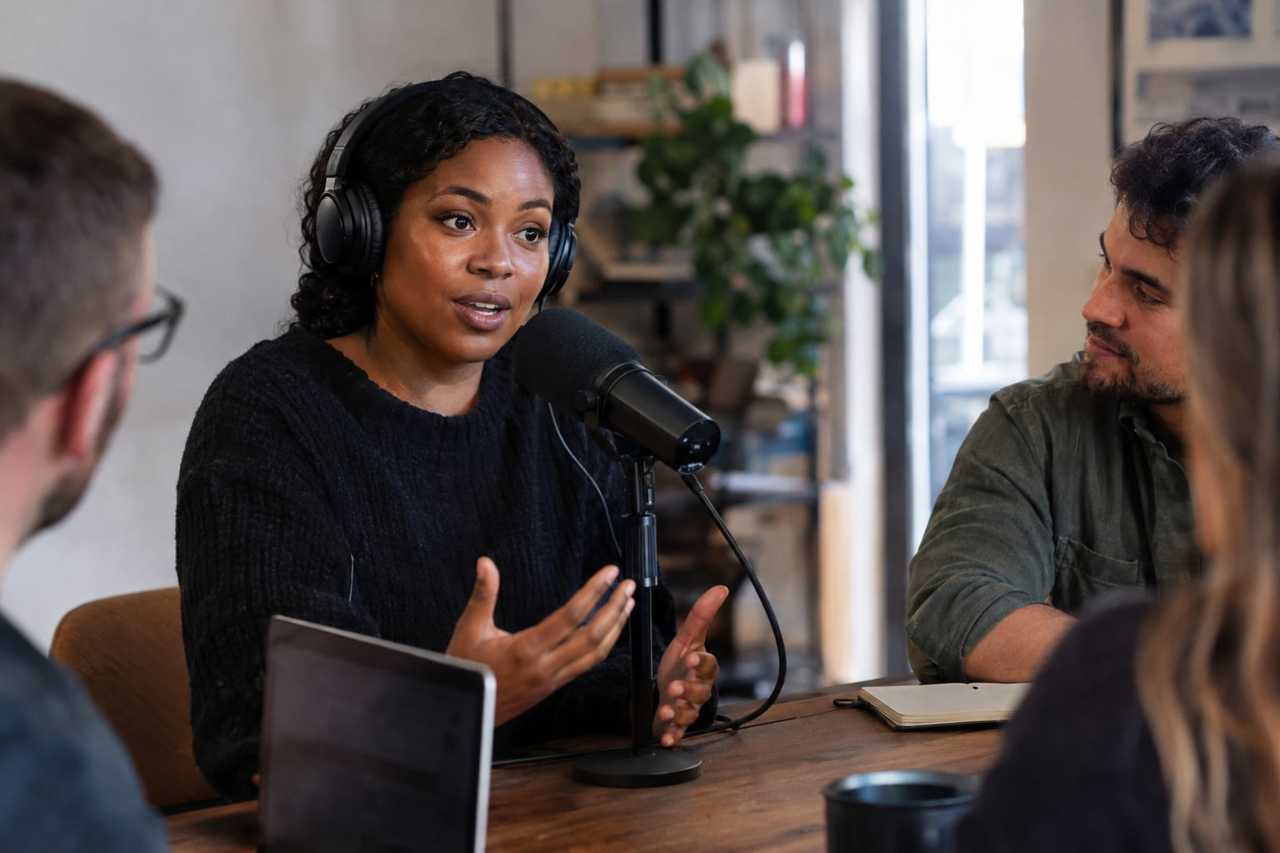
I've met a lot of strangers on buses, in hostels, at border crossings, who've told me things they'd probably never say to their own neighbors. Something about being far from home loosens people up. Turns out you don't need a 14-hour bus ride to get that effect. Sometimes all you need is a microphone and an hour.
That's basically what's happening with podcasting in China right now, and it's worth paying attention to.
A new report called "From Earphones to Public Life" was unveiled at the 2026 China Podcast Summit in Shanghai on November 14th. The summit itself pulled together 19 sessions under the theme "Waves and Fortresses," with creators, researchers, and people from media, tech, and nonprofits all showing up to talk about one thing: how people connect through this format.
And the numbers are bigger than I expected. Xiaoyuzhou, one of China's leading podcast apps — the name means "micro universe," which I love — reported 17 million active monthly users earlier this year. Four hundred thousand creators have published more than 10 million episodes on that platform alone. That's not a niche hobby anymore. That's a movement.
So what's actually happening inside these shows? The report, produced by Peking University's Center for Social Media Research with funding from the Gates Foundation, says Chinese-language podcasting has hit a moment worth studying closely.
Cheng Yanliang, CEO of JustPod and host of the podcast Left and Right since 2018, describes it simply: someone has an interest or a personal history, something they care about. They run into an experience and try to put it into words. Then the response comes back like a wave. His own podcast had more than 2 million subscribers as of 2025.
Wang Xiuli, who directs the CSMR, points to a shift in what people are actually talking about. Workplace struggles. Illness. Urban life. Environmental change. Global issues. Personal stuff that used to stay personal is now being turned into episodes — and listeners are realizing other people have lived through the exact same thing. That recognition, Wang says, is where the public value shows up. Scattered private experiences bump into each other and suddenly people understand their own lives, and their society, a little better.
Why does this work better in audio than, say, a tweet or an article? The report points to the format itself. A typical episode runs about an hour, which gives a complex story room to breathe. And there's something about the human voice — the pauses, the hesitations, the laughs — that makes an unfamiliar life feel relatable in a way text just doesn't.
Here's a number that surprised me: culture, knowledge, lived experience, and social issues together make up 74.2 percent of the episodes sampled in the report, and independent creators account for 83.3 percent of that content. This isn't big media companies pushing narratives. It's regular people, telling their own stories, and over 8 in 10 of the voices doing it are independent.
But there's a catch, and it's one I recognize from running my own site. Being public doesn't mean being seen. More than 80 percent of sampled episodes got recommended within four days of release — after that, the algorithm moves on, whether or not the work deserved more attention. Of 90 Editors' Picks in June 2026, only eight made that month's popularity chart, and each stayed there for just one day. Good, slow, thoughtful work is getting made. Finding it is the hard part.
That's partly why the One Way Street Foundation launched something called the Sonar Program at the summit — a creator-support project aimed at backing shows with originality and staying power, not just quick hits. Xu Nan, the foundation's founder, put it well: podcasts give ordinary voices somewhere to land, so people don't get flattened into labels.
I think about that a lot when I'm traveling. Everyone's got a story nobody's asked them about. Podcasting, it turns out, is one more way to ask.
What's the story you haven't told anyone yet — and who might actually want to hear it?
Source: China Daily Global Edition
Related reading from us: He Lost His Sight at 38 - So He Built a Microphone Out of the Darkness
Sponsored Area