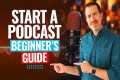
How to Start a Video Podcast in 2025! (Beginner's Guide)
85,598 View

- Publish Date:
- March 3, 2026
- Category:
- Learn to Podcast
- Video License
- Standard License
- Imported From:
- Youtube
⭐️ Check out our FREE CLASS on 3 Secrets for Growing Your YouTube Channel in 2025 here!: http://ThinkMasterclass.com
This video is sponsored by @StreamYard. Some product links are affiliate links which means if you buy something we'll receive a small commission.
=============================
All Products and Gear Mentioned in this video
(Amazon Links)
=============================
🎤 Mics
Audio Technica ATR2100X ➡️ https://geni.us/7XQdXx9
Hollyland Lark M2 ➡️ https://geni.us/BBgZmK4
Movo Wireless Mic Handle ➡️ https://geni.us/Vgwplf
Movo Wireless Mic Handle with mic flag ➡️ https://geni.us/I0nM
Shure MV7+ ➡️ https://geni.us/gAZMk
Shure MV7X ➡️ https://geni.us/hsSw
Shure SM7DB ➡️ https://geni.us/8VR9s
⚡️ Audio Interfaces
(RODE links)
RODECaster Pro II ➡️ https://bit.ly/thinkrodecasterproii
RODECaster Duo ➡️ https://bit.ly/thinkrodecasterduoblk
*also available in white ⚪️ ➡️ https://bit.ly/thinkrodecasterduowhite
Scarlet Solo ➡️ https://geni.us/3r2VU
📸 Cameras
Insta 360 Link 2C ➡️ https://geni.us/Qqu1BO
Sony ZV-E10 ➡️ https://geni.us/DIdT
Sony ZV-E10 II ➡️ https://geni.us/4swpn
HDMI Cable ➡️ https://geni.us/WHMhJ
HDMI Capture Card ➡️ https://geni.us/iZg9R
💡 Lighting
NiceVeedi 2 Pack Lighting Kit ➡️ https://amzn.to/40D24U0
Amaran 60D ➡️ https://geni.us/DED5lw
Amaran soft box ➡️ https://geni.us/NEJEs
===========================
Connect with us!
=============================
Tik Tok: ➡︎ https://www.tiktok.com/@thinkmediaofficial/
IG: ➡︎ https://www.instagram.com/officialthinkmedia/
===========================
Subscribe and Listen to the Think Media Podcast HERE:📱
===========================
➡︎YT: @ThinkMediaPodcast
➡︎Apple: https://apple.co/2F3tmIS
➡︎Spotify: https://spoti.fi/36qevE8
⏰ Timecodes ⏰
0:00 - How to Start a Video Podcast (for Beginners)
0:44 - Step 1) Equipment
1:17 - Upgrade Microphone
3:32 - Upgrade Camera
5:21 - Step 2) Environment
7:40 - Podcast Lighting
8:40 - Internet Connection
9:55 - Step 3) Recording
10:22 - Recording to SD Cards
11:02 - Recording to Podcasting Software
14:59 - Step 4) Editing
17:36 - Step 5) Publishing & Distribution
18:04 - Distributing Audio
19:29 - Distributing Video
21:25 - Review & Final Tips
===========================
Here are the ways to work with us here at Think Media:
===========================
⚡️FREE CLASS: Watch our FREE YouTube class here: ➡︎ http://ThinkMasterclass.com
⚡️BOOK: Check out the #1 best-selling book YouTube Secrets here: ➡︎ https://ytsecrets.com/
⚡️For Support inquires, or Business inquiries, please go to ➡︎ http://ThinkMediaSupport.com
⚡️Join our YouTube Course & Community TODAY with this special limited-time bundle at: http://joinvra.com
===========================
Connect with Sean Cannell on Social Media:
===========================
➡︎https://www.linkedin.com/in/seancannell/
➡︎https://twitter.com/seancannell
➡︎https://instagram.com/seancannell
===========================
What We Use For Music:
===========================
🔥 Get a 7-day free trial for new personal and commercial plan here! ➡️ http://thinkmediasounds.com
===========================
In-Depth Channel Analytics and Ideas
===========================
Get a 30-Day trial of vidIQ's Boost plan for just $1 here: 👉 http://vidiq.com/think
===========================
#thinkmedia #seancannell #youtubetips
Our mission here at Think Media is to help purpose-driven entrepreneurs go full-time doing what they love and making an impact through the power of video.
Disclaimer: Please see the link for our disclaimer policy for all of our videos on the Think Media and Think Media Podcast YouTube channels. https://go.thinkmedia.com/youtube-disclaimer
-----------------------------------------
PODCAST MASTERY: How to Make, Market, and Monetize Podcasts
Are you ready to learn how to Make, Market, and Monetize your podcast — even if you're just starting out? This fast-paced, value-packed course will show you exactly how to launch and grow a podcast that attracts listeners, builds authority, and generates income.
You'll learn:
✅ The best equipment to use
✅ How to find engaging guests
✅ How to land sponsorships easily
✅ Ways to grow your audience fast
✅ How to sell your products or services through your podcast
✅ What to do if you don’t have a product (yet!)
Whether you're an entrepreneur, creative, coach, or just have something to say — this course will guide you every step of the way.
👉 Click here to enroll now and start building your podcasting success!
Your voice has power — let the world hear it! 🎧
2 Must-Know Podcasting Tips for Your Show
Monetizing Your Podcast Effectively

Monetizing your podcast can turn your passion into a sustainable venture. Explore various revenue streams such as sponsorships, where companies pay to have their products or services featured in your episodes. Implement affiliate marketing by promoting products and earning a commission on sales generated through your unique links. Offer premium content or exclusive episodes through subscription models or platforms like Patreon. Additionally, consider selling merchandise related to your podcast to your loyal audience. Hosting live events or offering consulting services can also provide income opportunities. Diversifying your monetization strategies ensures a steady revenue flow while maintaining the quality and integrity of your content.
Leveraging Guest Appearances to Grow Your Audience

Featuring guests on your podcast can significantly expand your reach and attract new listeners. Select guests who are experts in your niche or have a substantial following that aligns with your target audience. Prepare thoughtful questions that allow your guests to share valuable insights and experiences, providing rich content for your listeners. Promote episodes with notable guests across both your and your guests’ networks, tapping into their audience base. Encourage guests to share the episode with their followers, increasing your podcast’s visibility. Collaborative episodes not only enhance the quality of your content but also foster relationships within your industry, contributing to your podcast’s growth and credibility.
Frequently Asked Questions
How can I make my podcast stand out in a crowded market?
Develop a unique voice, focus on a specific niche, deliver consistent quality, and engage authentically with your audience. Creative content and distinct branding also help differentiate your podcast.
Should I use background music or sound effects in my podcast?
Background music and sound effects can enhance your podcast by setting the mood and emphasizing points. Use them sparingly to avoid distracting from the main content and maintain a professional sound.
What legal considerations should I be aware of in podcasting?
Ensure you have rights to any music or content used, obtain necessary permissions for guest appearances, and adhere to copyright laws. Consider including disclaimers and privacy policies as needed.
What are effective ways to promote my podcast?
Utilize social media, collaborate with other podcasters, submit your show to podcast directories, and engage with your audience through newsletters or community forums to expand your reach.
How long should a typical podcast episode be?
Episode length can vary, but typically ranges from 20 to 60 minutes. Choose a duration that suits your content and keeps your audience engaged without overwhelming them.
How can I improve the audio quality of my podcast?
Use a quality microphone, record in a quiet environment, and apply noise reduction techniques during editing. Proper microphone placement and soundproofing can also significantly enhance audio clarity.
What are the benefits of having podcast show notes?
Show notes provide a summary of the episode, links to resources mentioned, and additional information. They improve SEO, offer value to listeners, and serve as a reference for your content.
Statistics
- Listener reviews and ratings contribute to a 25% increase in podcast discoverability.
- About 50% of podcast listeners prefer shows that offer a mix of solo and interview episodes.
- Podcasts that include detailed show notes experience a 50% increase in listener engagement.
- Podcasts that utilize analytics to refine content strategies experience a 40% improvement in listener satisfaction.
- Podcasts utilizing video snippets on social media experience a 20% rise in audience interaction.
- Podcasts that engage with their audience through email newsletters see a 30% higher retention rate.
- Listeners are 50% more likely to subscribe to podcasts that offer regular episode releases.
- Engaging storytelling techniques can increase listener retention rates by up to 50%.
- Podcasts that regularly update their equipment report a 40% improvement in audio quality and listener satisfaction.
- Podcasts with interactive segments, such as Q&A sessions, see a 25% boost in audience participation.
- Listeners prefer podcast episodes that range between 30 to 45 minutes, with 65% favoring this duration.
- Over 80% of podcasters report that having a dedicated website enhances their show’s visibility.
- Podcasts with consistent weekly releases are 60% more likely to grow their audience steadily.
- Using transcription services can make podcasts accessible to a wider audience, increasing reach by up to 25%.
- On average, podcasters spend about 10 hours per episode from planning to publishing.
- Podcasts that release episodes on Tuesdays and Thursdays see higher download rates by 30%.
External Links
listennotes.com
blog.libsyn.com
podcastitalia.com
apple.com
audacityteam.org
blog.podomatic.com
podcastgrandcentral.com
optimizingpodcasting.com
podbean.com
ahrefs.com
podcastpage.io
podcasters.spotify.com
adobe.com
transistor.fm
thepodcasthost.com
jeffbullas.com
patreon.com
How To
How To Create a Podcast Episode Checklist
Creating a podcast episode checklist ensures that each episode meets your quality standards and follows a consistent workflow. Start by listing all the necessary steps from planning to publishing, such as topic selection, guest coordination, scriptwriting, and recording. Include pre-production tasks like researching, scheduling, and preparing questions or outlines. During production, ensure that all equipment is set up correctly and conduct sound checks to verify audio quality. Post-production tasks should cover editing, adding music or sound effects, and finalizing the episode file for upload. Incorporate quality control measures, such as reviewing the episode for errors and ensuring all elements are cohesive. Finally, include publishing steps like uploading to your hosting platform, writing episode descriptions, and promoting the release on social media and other channels. A comprehensive checklist helps maintain consistency and efficiency, resulting in high-quality podcast episodes.
Sponsored Area