A New Voice for Basra's Christians: How a Podcast and a Radio Station Are Reaching the World
0 View

- Publish Date:
- November 29, 2026
- Category:
- Latest News
- Video License
- Standard License
- Imported From:
- Youtube
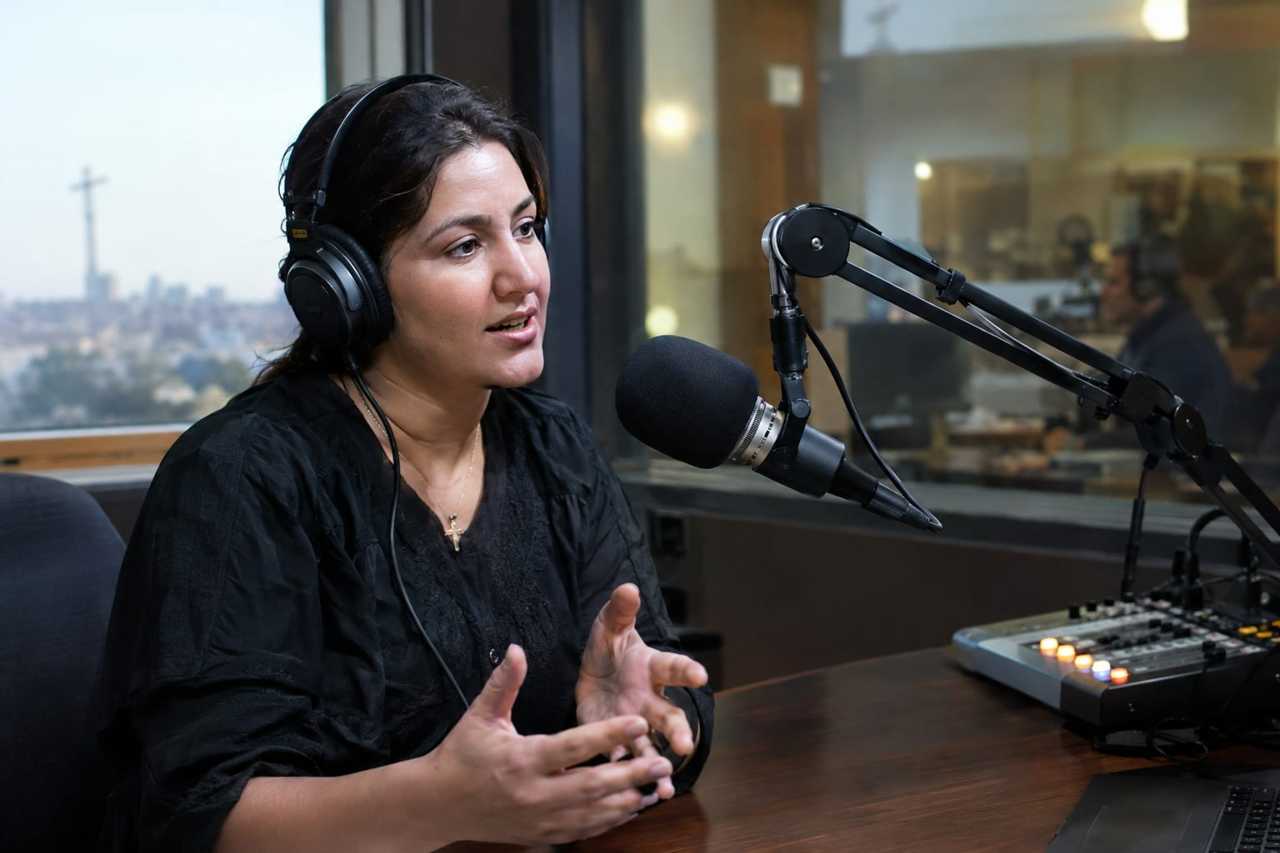
A tiny Christian community in southern Iraq just got a microphone. And they're not whispering into it.
Father Aram Bano has launched a new Catholic podcast out of a diocese building in Basra, built in a room equipped with help from people and institutions in Iraq, the United States, Australia, and Sweden. Four countries. One broadcasting room. That's not a local project anymore—that's a network.
Why does that matter? Because Christians in southern Iraq are a small minority, and small minorities don't usually get much of a platform. A podcast changes that math. It doesn't need a transmitter tower or a government license. It just needs a room, some equipment, and someone willing to hit record.
Bano said the work has already started with whatever gear they had on hand, even though the technical setup isn't finished. More equipment is still needed. But instead of waiting for everything to be perfect, they're broadcasting now and hoping the rest comes later. That's a philosophy I respect. You don't need the whole plan locked in before you start moving. You start with what's in front of you and build as you go.
The podcast carries hope in its name and in its content—though the article doesn't spell out the actual name, the intent is clear. It's meant to reach further than the Christian community itself. Episodes will run in Arabic, English, or Sureth, depending on who's being interviewed, and everything gets written translations so people in Iraq and abroad can follow along regardless of which language they grew up speaking.
Think about what that means practically. A grandmother in Basra who speaks Sureth, a cousin who emigrated to Detroit and speaks English, a journalist in Baghdad who reads Arabic—all three can follow the same conversation. That's not a small technical detail. That's the whole point. A community scattered by history and migration gets stitched back together through a feed anyone can download.
I've spent years now living out of a backpack, moving between countries, relying on exactly this kind of technology to stay connected to people and places I care about. A podcast feels simple until you realize what it actually does—it collapses distance. Someone in Sweden who helped fund that broadcasting room can listen to the same episode as someone walking to church in Basra. Nobody needed a passport or a plane ticket for that conversation to happen.
The timing lines up with something bigger. Chaldean Patriarch Paul III Nona made a pastoral visit to Basra, and during that visit, a Catholic radio station called "Maran" Radio went live. It belongs to the Syriac Catholic Church in Basra, and it's the first Catholic radio station anywhere in southern Iraq. First. Not first in a while. First, period.
Here's the detail that caught my attention most. Maran Radio's pastor, Bishop Firas Dardar, didn't keep it within his own church structure. He handed management of the station over to Father Aram Bano—the same priest running the podcast, but from a different church tradition. Syriac Catholic leadership entrusting a Chaldean priest with their radio station isn't a bureaucratic footnote. That's two branches of the same faith, worn down by decades of conflict and displacement in Iraq, choosing cooperation over turf.
So what does this mean for you, sitting wherever you're sitting right now? Maybe nothing directly. But it's a reminder of something I keep running into on the road: people figure out how to be heard with whatever tools they've got, wherever they are. Nobody in Basra waited for perfect infrastructure. They borrowed support from four countries, started recording with partial equipment, and decided that languages weren't a barrier to solve later—they were a feature to build in from day one.
What happens when a community that's been overlooked finally gets a working microphone? You find out things you didn't know. You hear voices that don't usually make the news. And you realize borders, languages, and even old denominational lines matter less than the simple decision to press record and share what you've got.
Worth asking yourself: what's your version of that broadcasting room? What are you waiting to be "fully equipped" for, when you could just start with what's already in front of you?
Source: EWTN News
Before this, we covered: India's Podcast Boom Is Happening on YouTube, Not Spotify
Sponsored Area