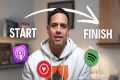
How To Start a Podcast From Scratch | Podcasting for REAL Beginners Like ME!
52,954 View

- Publish Date:
- March 16, 2026
- Category:
- Learn to Podcast
- Video License
- Standard License
- Imported From:
- Youtube
Mentioned in this video:
Ferrite: https://apps.apple.com/us/app/ferrite-recording-studio/id1018780185
BuzzSprout: https://www.buzzsprout.com
My new Podcast, Launching Better Parents: https://launchingbetterparents.buzzsprout.com/
Fiverr sellers: Graphic: https://www.fiverr.com/reemalzohail671 Intro/outro: https://www.fiverr.com/awwyeah
Riverside.fm: https://riverside.fm/
***Ready to Unleash Your Something Amazing?!***
Join the Unleash Your Profit Group Coaching Program:
As a brand strategist, I coach entrepreneurs through the transition from startup to profitability. If you’re interested in working with me in my group coaching program be sure to click the link below for a link to the Unleash Your Profit Course.
Learn more about the Unleash Your Profit course here: ashleetate.com/work-with-me
***For my Social Entrepreneurs***
How to Start Your Nonprofit
I've helped nearly 200 Founders start and build their nonprofits and social impact businesses with my Unleash Your Purpose Course where I walk you through each step in 30 days or less! Check it out here: ashleetate.com/work-with-me
***Not quite ready to take the leap?***
Still on the fence? Come join over 700+ members in the tribe on the same journey for free! Join us here: ashleetate.com/jointhetribe
Looking forward to walking with you on this journey!
How To Start a Podcast From Scratch | Podcasting for REAL Beginners Like ME! : https://youtu.be/Uvzxlr5862g
________________________________________________________________________________________________
***Who is Ashlee Tate?***
Ashlee Tate is a Strategic Communications Consultant and self-proclaimed serial entrepreneur. Combining her skills in the areas of branding, event planning, public relations, social media, and strategic planning, Ashlee helps clients design a life and business they love ON purpose.
Ashlee holds a Bachelor's Degree in Healthcare Administration from California State University, Sacramento, and a Master’s degree in Organizational Communications and Leadership from Gonzaga University.
Her online business, The Socialife Diaries, provides group coaching to budding entrepreneurs and nonprofit founders. In addition, she provides face-to-face business consulting to her local community with the Shasta Cascade Business Development Center.
Since 2015, Ashlee has been the founder and executive director of LaunchPad 4 Kids, Inc., a nonprofit designed to provide children from underserved environments the opportunity to participate in extracurricular activities through crowdfunding.
As a veteran of the United States Army, Ashlee Tate is no stranger to teamwork, commitment, and community service. Over the past 11 years, during her time in Redding, CA, Ashlee has served her community by participating in various nonprofit organizations and boards including The Chamber of Commerce, United Way, and The Girl Scouts of Northern California. To highlight the community she loves, Ashlee created and co-hosted a local television show on the Public Broadcast Station KIXE Channel 9 in Redding, CA. The Forum ran for five years featuring ‘interesting people doing interesting things in the Northstate’.
Ashlee believes in the power of connection and purpose in everything she does. In between spending time with her husband and two children, Ashlee enjoys entertaining, traveling the world, or just reading a good book. You can see more behind the scenes and inspo on Instagram @thesocialifediaries
_______________________________________________________________________________________________
***Watch These Videos Next***
How to Build a Personal Brand with the Social Method: https://youtu.be/NOVWgBFXsD8
How To Get Over FEAR OF FAILURE For Women Entrepreneurs: https://youtu.be/yPCRjdc1a0I
3 Ways To Start A Nonprofit WITH Your For-Profit Business: https://youtu.be/qYylSvRl_5Y
#startapodcast #podcasting #entreperneurship
-----------------------------------------
How to Start a Podcast - Podcasting Made Easy
Podcasting Made Easy is your ultimate guide to launching a successful show—fast, fun, and with zero overwhelm. Taught by podcast pioneer Scott Paton, this bestselling course walks you through setup, hosting, publishing, and growth strategies. With over 32,000 students, you’ll learn how to use tools like Libsyn, reach Spotify and Google Podcasts, and even build a podcasting business. Whether you're brand new or ready to scale, Power Podcasting helps you grow influence, relationships, and revenue—all while whispering directly into the ears of your ideal audience. Ready to get your voice heard and change lives?
3 Must-Know Podcasting Tips for Your Show
Integrating Music and Sound Effects Appropriately

Music and sound effects can significantly enhance the quality and appeal of your podcast when used appropriately. Select intro and outro music that reflects the tone and theme of your show, creating a consistent auditory brand identity. Use background music sparingly during episodes to complement the conversation without overpowering it. Incorporate sound effects to emphasize key points, transitions, or humorous elements, adding a dynamic layer to your content. Ensure that all audio elements are balanced and do not distract from the primary audio, maintaining a professional and polished sound. Thoughtful integration of music and effects can make your podcast more engaging and enjoyable for your listeners.
Utilizing SEO Strategies for Podcast Visibility

Implementing SEO strategies can enhance your podcast’s visibility on search engines and podcast directories. Start by conducting keyword research to identify terms your target audience is searching for. Incorporate these keywords naturally into your podcast titles, descriptions, and show notes. Optimize episode titles to be both descriptive and keyword-rich, improving discoverability. Transcribe your episodes to provide text content that search engines can index, boosting your SEO efforts. Additionally, use relevant tags and categories when submitting your podcast to directories. By leveraging SEO, you increase the likelihood of your podcast being found by new listeners actively seeking content in your niche.
Selecting the Best Hosting Platform for Your Podcast

Choosing the right hosting platform is essential for distributing your podcast efficiently and reaching your target audience. Evaluate platforms based on factors such as storage capacity, bandwidth, ease of use, and analytics capabilities. Look for services that offer reliable uptime and fast upload speeds to ensure your episodes are accessible to listeners without delay. Consider platforms that support multiple podcast directories, including Apple Podcasts, Spotify, and Google Podcasts, to maximize your reach. Additionally, assess whether the hosting service provides tools for monetization, such as advertising integration or subscription options. A robust hosting platform simplifies the distribution process, allowing you to focus on creating quality content for your audience.
Frequently Asked Questions
What software is best for recording and editing podcasts?
Popular options include Audacity, which is free and user-friendly, and Adobe Audition, which provides advanced editing features. Choose software that fits your skill level and editing needs.
What is a podcast hosting service and why do I need one?
A podcast hosting service stores your audio files and distributes them to various platforms. It provides essential analytics, ensures reliable delivery, and often offers tools for monetization and audience engagement.
What are the best ways to receive feedback on my podcast?
Encourage listeners to leave reviews, conduct surveys, engage on social media, and create a feedback form on your website. Constructive feedback helps you improve and grow your podcast.
What are effective ways to keep listeners coming back to my podcast?
Deliver consistent, high-quality content, engage with your audience, provide value in each episode, and build a strong connection through storytelling and relatable topics to retain listeners.
Statistics
- Listeners are 50% more likely to subscribe to podcasts that offer regular episode releases.
- Investing in professional editing services can enhance the overall quality of a podcast, leading to a 30% increase in positive feedback.
- Podcasts that engage with their audience through email newsletters see a 30% higher retention rate.
- About 55% of podcasters use interviews as a key strategy to provide diverse content.
- Engaging storytelling techniques can increase listener retention rates by up to 50%.
- Approximately 40% of podcasters use background music to enhance the listening experience.
- Podcasts with consistent weekly releases are 60% more likely to grow their audience steadily.
- Podcasts utilizing video snippets on social media experience a 20% rise in audience interaction.
- Podcasts that regularly update their equipment report a 40% improvement in audio quality and listener satisfaction.
- Listeners prefer podcast episodes that range between 30 to 45 minutes, with 65% favoring this duration.
- Podcasts with eye-catching cover art are 45% more likely to attract new listeners.
- About 50% of podcast listeners prefer shows that offer a mix of solo and interview episodes.
- Over 80% of podcasters report that having a dedicated website enhances their show’s visibility.
- Using transcription services can make podcasts accessible to a wider audience, increasing reach by up to 25%.
- Podcasts promoting their episodes on social media platforms see a 40% boost in new subscribers.
- Approximately 70% of successful podcasters invest in high-quality microphones to ensure clear audio.
External Links
mailchimp.com
listennotes.com
blog.libsyn.com
podcastgrandcentral.com
audacityteam.org
podbean.com
buzzsprout.com
podcastmovement.com
help.apple.com
adobe.com
jeffbullas.com
podcastcareers.com
analytics.google.com
radiopublic.com
shutterstock.com
podcasters.spotify.com
anchor.fm
How To
How To Use Transcriptions to Enhance Your Podcast
Using transcriptions enhances your podcast by making it accessible and improving SEO. Start by transcribing each episode accurately, either manually or by using transcription services that convert audio to text. Publish the transcriptions on your podcast’s website or dedicated pages, allowing listeners who prefer reading to access the content. Transcriptions also benefit those with hearing impairments, ensuring your podcast is inclusive and reaches a wider audience. Additionally, transcriptions improve your podcast’s SEO by providing search engines with text content to index, increasing the likelihood of your episodes being discovered through relevant keyword searches. Use transcriptions to repurpose content into blog posts, articles, or social media snippets, further extending your podcast’s reach and engagement with your audience.
Sponsored Area